Due to the extensive and unprecedented use of helicopters for nearly all aspects of combat and support, the Vietnam War is sometimes referred to as the “Helicopter War”. Helicopter missions in the Vietnam War were central to U.S. strategy. The missions ranged from transporting troops to battle zones, extracting them from enemy territory, conducting reconnaissance, delivering equipment and supplies, performing medevacs under fire, as well as providing devastating air support using mounted machine guns or rocket systems. The helicopters were vital in adapting to the Vietnam jungles and mountainous terrain, as well as guerilla warfare tactics.
The U.S. Army was the branch that relied the most on helicopters during the Vietnam War. Nearly 12000 helicopters took part in the war, and over 5,001 died during combat or accidents.
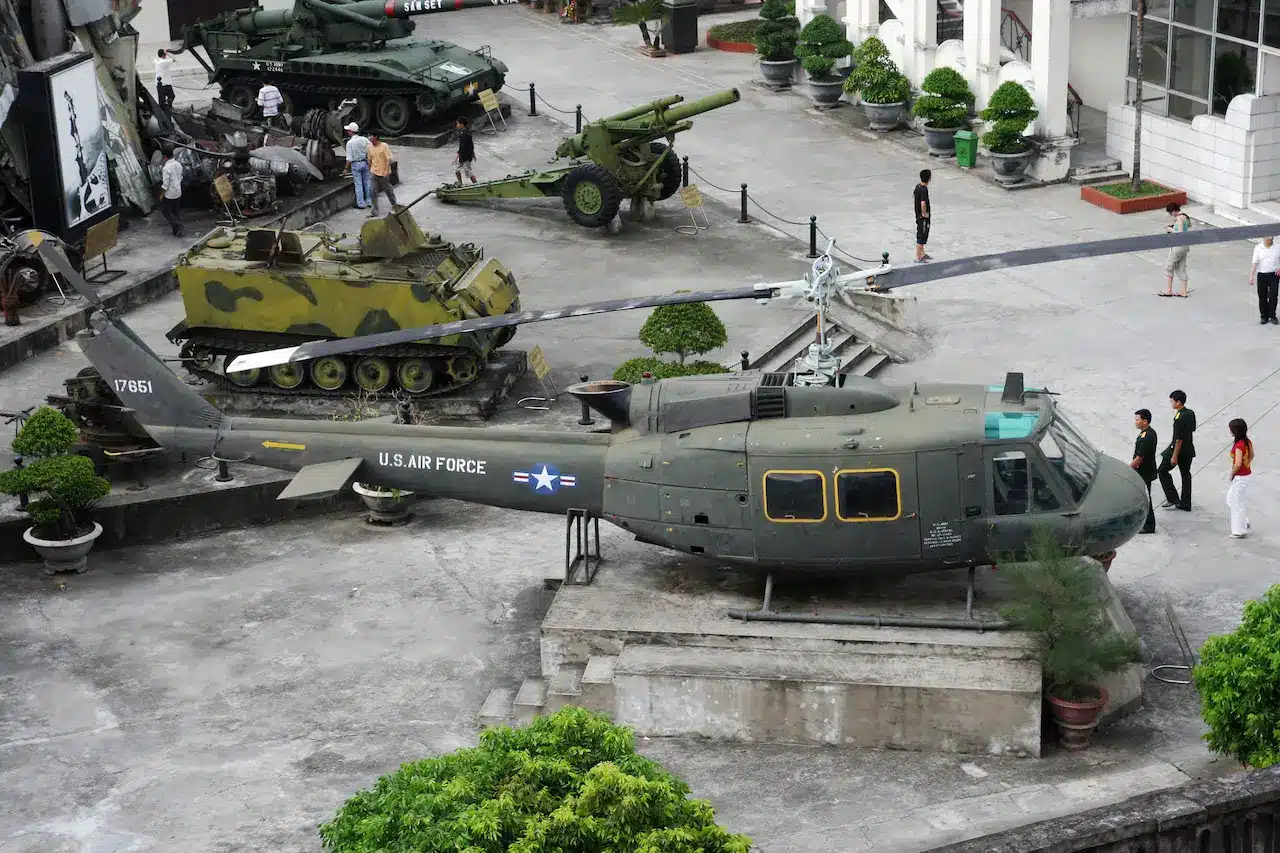
The Bell UH-1 Iroquois was one of the most iconic helicopters. It is better known as the “Huey.” Logging more than 10 million flight hours during the war, the Huey has become a defining icon of the conflict. The Huey’s unique rotor noise and versatility made it a workhorse for Vietnam’s airmobile strategies.
The Vietnam War saw helicopters emerge as more than just a means of transportation. They were a weapon, a shield, and a lifeline. Here are six iconic helicopters from the Vietnam War that played a significant role in shaping the conflict.
Helicopter Missions
The Vietnam War describes one of the most dangerous and daring helicopter missions in history. This harrowing incident saw a group of South Vietnamese soldiers, led by U.S. Special Forces, ambushed by more than 600 North Vietnamese soldiers and surrounded. Their only chance of survival, despite being cut off, outnumbered, and under heavy fire, was to escape by air.
Only two Huey helicopters, neither armed, were available when the call for assistance was made. The dense jungle terrain made matters worse because there was no clear landing area. The pilots were faced with a difficult decision as the ground was covered by a 40-foot-high bamboo tangle. They refused to abandon the soldiers trapped in the bamboo and used the rotating rotors of their helicopters as a weapon to cut through it, creating a landing area amid enemy fire.
The two Hueys, despite the odds, made five separate trips into the hot zone. Each time, they risked destruction both from the environment and enemy fire. The pilots and crews managed to save every survivor through sheer determination and amazing flying skills. This mission is a testament to the courage and ingenuity shown by helicopter crews during the Vietnam War. It also shows how helicopters revolutionised rescue and combat operations.
Helicopters Were Used in the Vietnam War
Bell UH-1 Iroquois
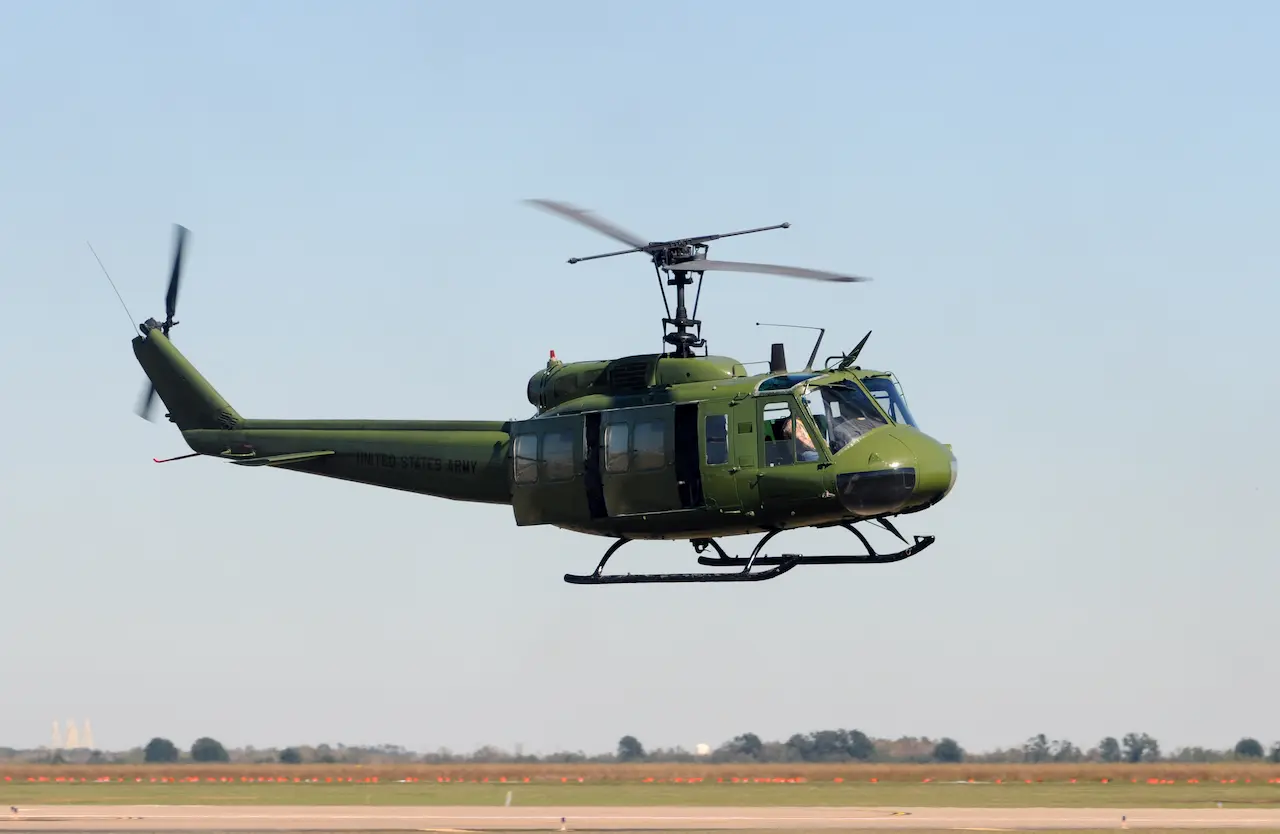
The “Huey” is arguably the most iconic helicopter from the Vietnam War. It became a symbol of the U.S. presence in Southeast Asia. The Huey was first introduced in 59 and earned its nickname by its original designation HU-1. It was later reclassified to UH-1. The Huey’s distinctive rotor noise and sleek silhouette made it an iconic image of World War II, appearing in numerous documentaries, photographs, and films.
During the Vietnam War, Hueys played a major role in air assaults, troop transport, evacuation of medical personnel (medevac), delivery of supplies, and close air support. They were indispensable in nearly every mission because of their adaptability. The ability of the helicopter to insert and remove soldiers from rugged, dense jungle terrain provided American forces with unprecedented mobility and response time. At the height of the war, Hueys performed multiple missions a day under heavy enemy fire.
Hueys were designed to be modified, including the addition of machine guns and rocket pods. This allowed them to become a powerful gunship when required. The Huey’s success in combat and rescue operations has left a legacy far beyond the war. Updated versions of the Huey continue to be used in law enforcement and emergency services around the world, as a testament to its durability and design.
Bell AH-1 Cobra
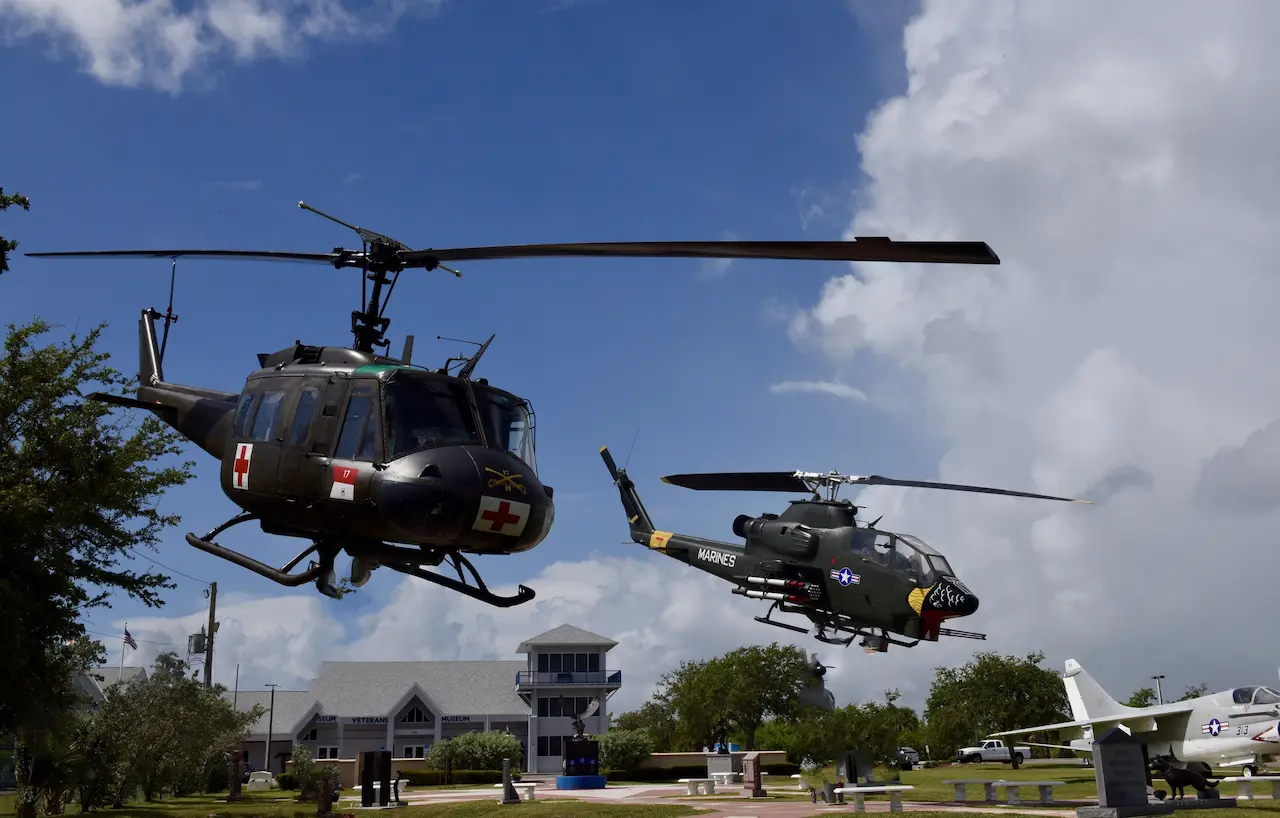
Introduced in 1967, the Bell AH-1 Cobra was the U.S. military’s first dedicated attack helicopter–developed in response to the limitations of arming standard utility helicopters like the Huey. The Cobra was powered by a single Lycoming T53L-13 turboshaft motor and featured a sleek profile. It also had tandem seating for the pilot and gunner.
The AH-1, designed primarily to perform anti-armour missions, proved its worth in the volatile and unpredictable combat environment that was Vietnam. The Cobra was a fast, agile and deadly aircraft that became an integral part of Army Aviation tactics. It flew in accompanying roles with Hueys for troop insertions or extractions. The Cobra played an important role in Close Air Support by striking enemy positions with accuracy while protecting friendly ground forces.
The Cobra’s partnership with Huey led to the creation of a powerful, iconic team in air combat: the Huey transporting troops or supplies and the Cobra flying a shotgun ready to unleash heavy firepower on a moment’s notice. The Cobra’s performance in Vietnam laid a foundation for modern attack helicopters and is still one of the most significant chapters in the history of rotary-winged combat.
Kaman SH-2 Seasprite
The Kaman SH-2 Seasprite was a twin-engine naval helicopter that was first introduced by the U.S. Navy in 1957. Seasprite, designed primarily for shipboard missions, played an important–and often overlooked–role in the Vietnam War. This was especially true of antisubmarine warfare and Search-and-rescue missions.
Seasprites, which were deployed regularly from aircraft carriers, destroyers, and frigates in the dangerous waters of the South China Sea and Gulf of Tonkin to act as an aerial shield, acted against any potential enemy submarines. They were equipped with torpedoes and depth charges as well as sonar systems. This allowed the Navy to extend its reach below the waves.
The SH-2 Seasprite performed rescues of downed sailors and pilots in hostile environments. Seasprites responded quickly when aircraft were shot over open water or naval personnel were in distress. They hovered with precision and braved rough seas to perform life-saving hoisting operations.
The Seasprite, though not as well-known as the Huey and Cobra, was a significant naval aircraft support in the Vietnam War. It also laid the foundation for future generations’ multirole naval helicopters.
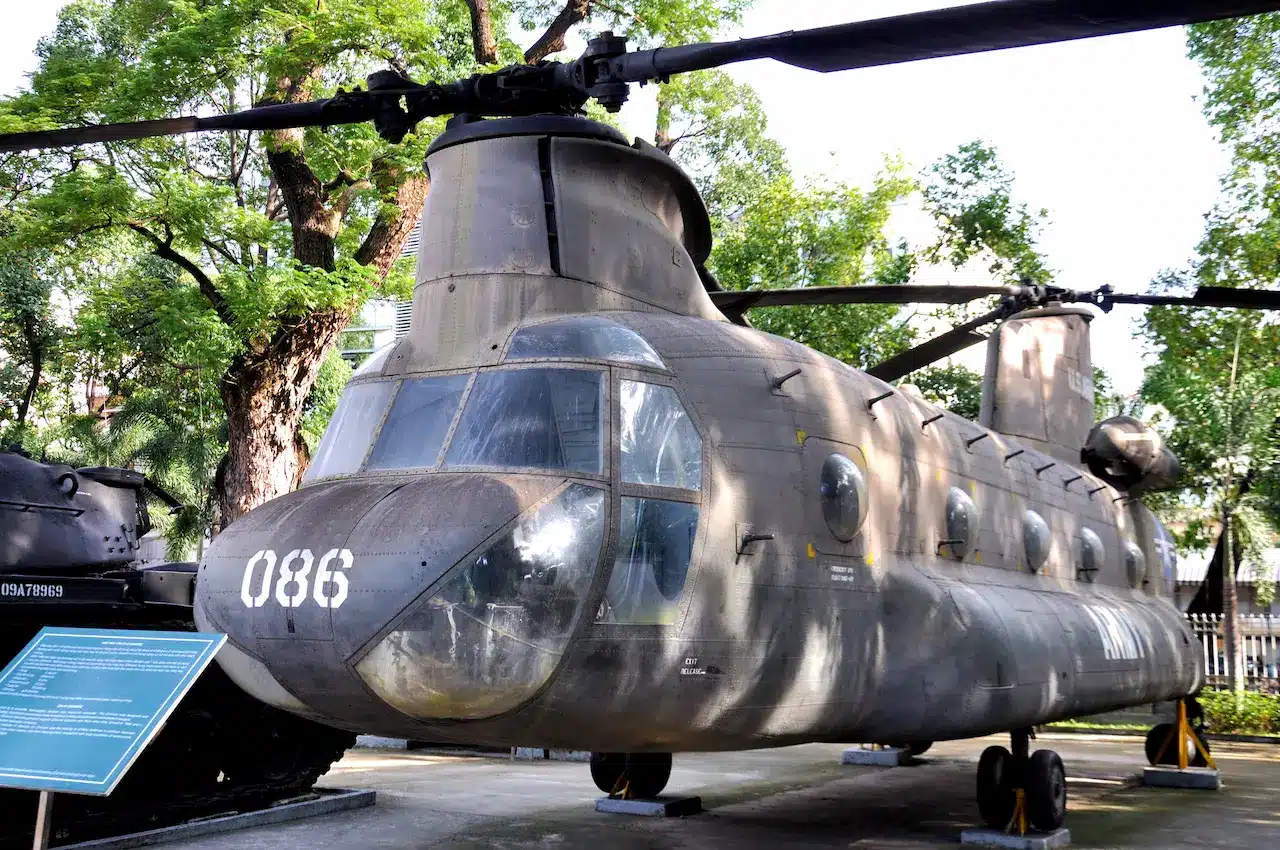
CH-47 Chinook
The Boeing CH-47 Chinook, a powerful twin-engine tandem-rotor helicopter, is still in service today, more than 50 years after its launch. The Chinook has a large rear loading ramp and three external cargo hooks. It is known for its payload capacity, speed and versatility.
In 1965, the U.S. Army deployed the CH-47 to Vietnam, initially as support for the 1st Infantry Division. The CH-47’s ability to carry 7,000-8,000 pounds of cargo made it an indispensable tool in many operations. The Chinook played an important role in three areas: troop movements, artillery placement and battlefield resupply. Its most important contribution was the placement of artillery batteries on remote mountainous terrain, which were not accessible by truck or foot. The Chinook made sure that once the artillery batteries were in place, they were stocked with ammo, water, rations and other essential supplies.
The CH-47 has been used to lift downed helicopters and damaged equipment off the battlefield. It was also used for casualty extraction and aircraft retrieval. The Chinook was equipped with an M60 7.62 mm machine gun to defend itself. It proved to be both tough and resilient in the face of fire. The Chinook’s continued use in military operations across the globe demonstrates the effectiveness of the original design.
CH-53 Sea Stallion
The Sikorsky CH-53 Sea Stallion was introduced in 1967 and served the U.S. Marine Corps and Navy used the Sikorsky CH-53 Sea Stallion as an assault and heavy-lift transport helicopter during the Vietnam War. The Sea Stallion, which was larger than the Chinook helicopter, could carry up to 38 fully-equipped combat troops or 24 patients and four medical personnel when used in a medevac configuration.
The CH-53’s ability to carry external freight weighing up to 20,000 pounds makes it an ideal vehicle for transporting heavy equipment, such as artillery, vehicles and construction materials, to forward operating bases. The CH-53 has also been heavily used for aircraft retrieval missions. This involved recovering downed helicopters under hazardous conditions.
Sea Stallions were also used by the U.S. Navy in minesweeping missions. This involved specialised equipment that was used to detect and remove naval mines along vital waterways. Both the Navy and Air Force also used the CH-53 for Search and Rescue missions in high-risk zones.
The Sea Stallion was perhaps most memorable for its role in the Vietnam War’s final chapters. The Sea Stallion was used in the dramatic escapes of U.S. civilians and military personnel from Saigon and Phnom Penh, which marked the end of American involvement. Sea Stallion’s multi-mission versatility and powerful performance earned it a place in combat aviation history.
How the Huey Remains Relevant Today?
Many of the more than 16,000 Bell UH-1 “Huey” helicopters built since the 1950s are still operating around the globe. The Huey is still in use in many roles, even though the U.S. Army has reduced its front-line usage. This is especially true of export variants that are used by allied nations.
The Huey is a versatile and rugged aircraft that has been able to seamlessly transition into civilian roles. It is widely used by firefighters for aerial firefighting and police agencies for surveillance, transport and transportation. Emergency services (EMS) are also using it for medevac missions on remote or difficult terrain. The reliability, ease of maintenance, and performance of the aircraft in a variety of environments make it a reliable workhorse.
The story of the AH-1 Cobra, a close relative of the Huey, took a different turn. The AH-1, originally developed as a Huey-based attack helicopter, was retired by the U.S. Army after the introduction of the AH64 Apache. The U.S. Marine Corps, however, continued to use an upgraded version of the AH-1J “SuperCobra” into the 21st Century. The Marines retired the SuperCobra in 2020 and replaced it with the AH-1Z “Viper”. This modernised, more lethal version maintains the AH-1 lineage.
The legacy is carried on not only by these missions and platforms that are still in use but also through the images and stories of Hueys captured over the years, from the jungles in Vietnam to conflicts fought in Grenada, Panama and beyond. The Huey is perhaps more than any other aircraft an icon of courage, sacrifice and resilience. The Huey has been immortalised in many war films, books and documentaries. It is one of the most iconic aircraft that has ever existed in the history of military aviation.