

Understanding Time Travel Science
Since the dawn of time, people have been fascinated by time travel. Many scientific theories and fictional stories have been inspired by the subject. Many readers are curious about time travel and what science has to say. Time Machines offers a comprehensive answer to these questions by combining fascinating research and scientific insight. The study of time machines will examine how physics and paradoxes, along with relativity and modern theories, help us to understand the possibility of time travel. Scientists such as Isaac Newton, Albert Einstein, Stephen Hawking and Michio Kaku all contributed to this field and helped shape the public’s understanding of time travel.
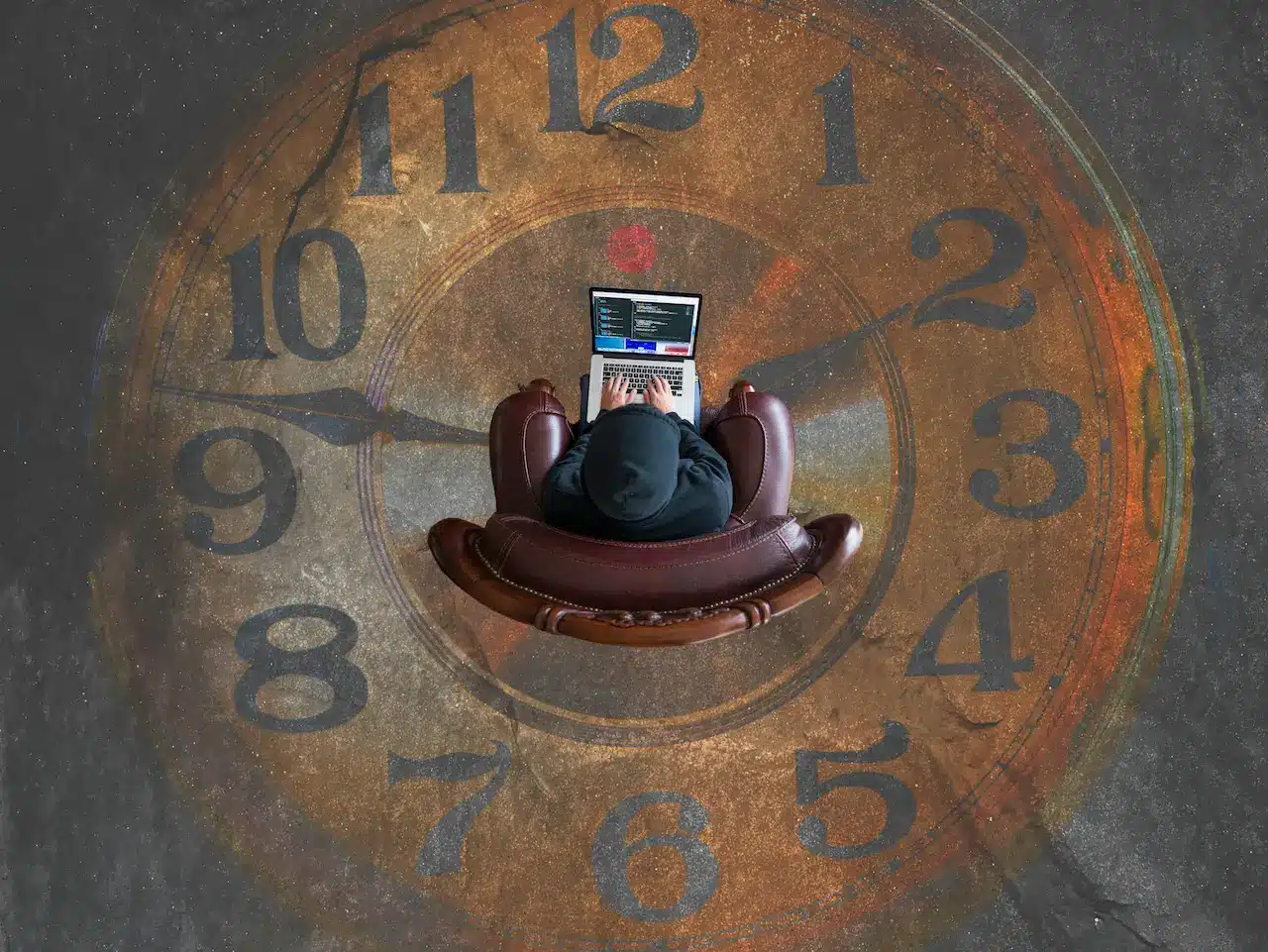
Scientists have been studying the nature of time for many decades. Their discoveries continue to challenge what we believe is possible. Newton’s early research viewed time in a universal and absolute way. It was a constant, flowing uniformly everywhere. Einstein changed this perspective with his theories of Relativity, which showed that time and space are interconnected. Knowledge of relativity, mathematics and physics is necessary to explore time machines. These concepts are complex but can be made simpler with examples. Understanding these concepts is the first step to studying time travel.
Understanding Time & Physics
Early scientists thought that time moves in a single direction. Newton viewed it as an absolute, straight line that was the same everywhere. This made predicting the past and future easy. This view changed as new theories were developed.
Modern physics has shown that the behaviour of time is affected by speed and gravity. According to Einstein’s theories on special and general relativity, time can speed up or slow down under certain circumstances. Clocks located near massive objects act differently from clocks that are further away. Stephen Hawking investigated the implications of black holes and other cosmic phenomena. Michio Kasu helped to popularise these ideas.
In order to fully grasp time, it is important to understand its relationship with space. Einstein proved that spacetime is a structure consisting of both space and time. The flow of time is altered when spacetime bends around large objects such as stars and planets. These concepts demonstrate that time isn’t always a straight line and can behave unexpectedly, which is important when studying time travel.
Time Travel and Relativity
Einstein’s Special Relativity shows that objects moving fast change in time. The traveller’s time is slowed down when they are near the speed limit of light. This effect has been confirmed by experiments, allowing time travel in the future.
General relativity includes gravity in these concepts. Weak fields of gravitation slow down time more than strong ones. A clock located near a large planet will tick more slowly than a clock in space. Stephen Hawking studied these effects on black holes and cosmic phenomena, which helped us to understand the limitations and possibilities of time travel.
The complexity of time travel in the past increases. General relativity predicts cosmic patterns, such as closed timelike curvatures, that may allow for backward travel. Michio Kaku popularised the concepts and made them more accessible.
Time Travel Paradoxes
Paradoxes pose a serious obstacle to theories of time travel. When history contradicts itself, a paradox is created. A traveller, for example, could prevent their grandfather from having a child, which would erase his existence.
A second paradox is receiving information from the past. Imagine that a scientist fails to build a working time machine. A younger version of the scientist provides the solution. The younger scientist is successful. It is important to ask: Where did the original idea originate?
Some theories offer ways to avoid contradictions. Some theories suggest that the universe could self-adjust in order to avoid impossible scenarios or that each decision would create a different timeline, which allows for paradox-free situations. These ideas were explored by Hawking and popularised by Kaku. They show how modern physics attempts to reconcile logic with time travel.
Wormholes, Theoretical Time Machines
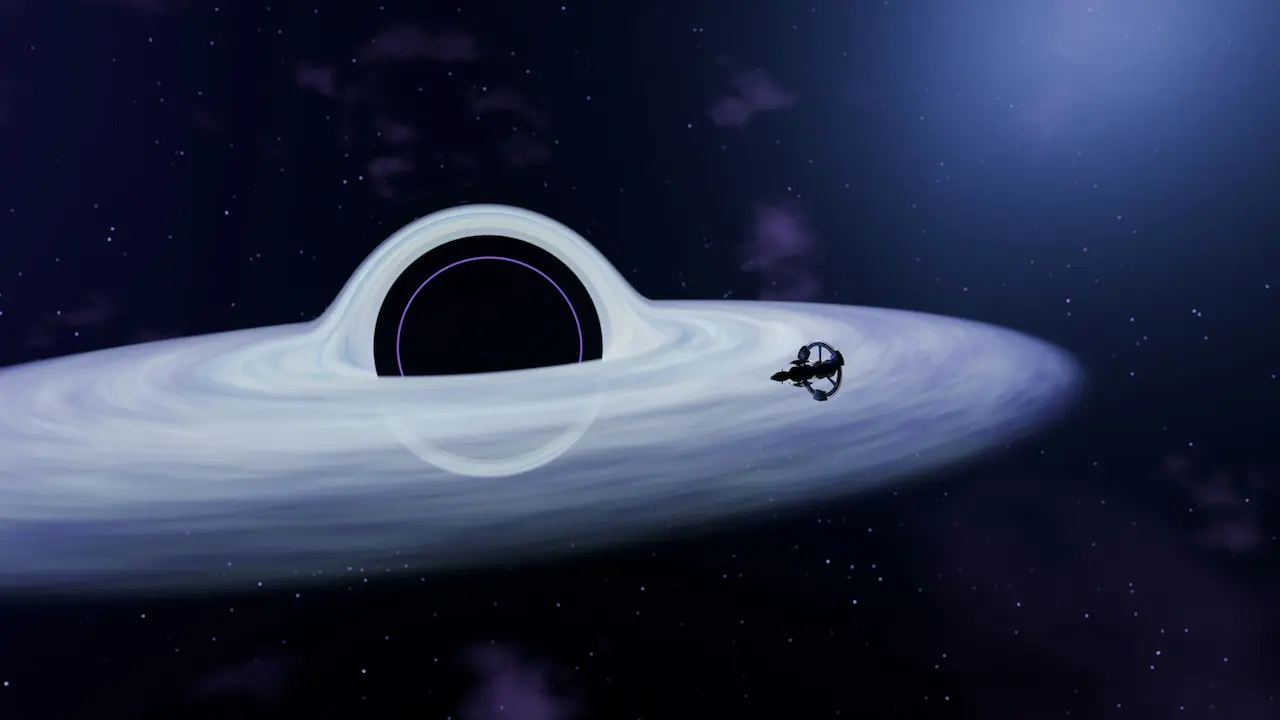
A wormhole is a spacetime tunnel that can connect two distant points, allowing travel over vast distances and even to different times. Theoretically, a wormhole can allow travellers to travel through time and space, allowing them to leave from a different location. Stephen Hawking studied the implications of wormholes for space travel and for time travel. Michio Kaku popularised the ideas, explaining complex physics in a way that is exciting and accessible. Wormholes are still a key concept in discussions of theoretical physics about time machines.
Creating a stable and traversable wormhole is a huge challenge in terms of science and technology. It would take enormous amounts of energy and exotic matter with strange properties that push outward instead of inward to prevent the wormhole from collapsing. Even if the wormhole existed, it would be difficult to maintain its stability for long enough to allow safe travel. Due to these problems, time travel via wormholes is still a theoretical concept. No experiment has come close yet to creating a wormhole. The study of wormholes inspires new research on the nature of spacetime and the limits of physics.
Quantum Theory of Multiple Timelines
The quantum theory introduces the concept that objects and particles can exist simultaneously in different states, also known as superposition. Scientists believe that this principle can allow time travel in order to avoid classic paradoxes such as the Grandfather paradox, by creating parallel timelines instead of changing the original history. According to this theory, a time traveller altering events in the past could branch out into a different timeline, while leaving the original timeline untouched. Kaku and Hawking have all speculated about how quantum mechanics could enable paradox-free travel. This highlights the potential for quantum phenomena to fundamentally change our understanding of causality.
Quantum time travel is still a highly speculative concept, despite its intriguing possibilities. Due to current technological limitations, the mathematical frameworks are primarily available in theoretical models. Experimental verification is not possible. The complexity of controlling time and maintaining coherence within quantum states is are huge obstacle. Exploring quantum theories of multiple timelines offers valuable insights into reality. They suggest that the universe is more mysterious and flexible than we think. This research pushes the limits of physics and challenges scientists to rethink time and causality.

Energy Needs & Scientific Challenges
Even in theory, the construction of a machine would require an enormous amount of energy, which could be equivalent to that of an entire star. This magnitude of energy, which is beyond the current technological capability of generating and controlling, is one of the main barriers to time travel. In addition to energy, exotic materials would be needed with unique properties, such as negative density energy, that could counteract the gravitational collapse. Quantum forces, such as fluctuations on the microscopic level, could destabilise the structures and make safe passage impossible. In their research, leading physicists like Stephen Hawking or Michio Kaku highlighted these challenges. They showed why time travel is still a theory and not a technology. These obstacles show the limits of current scientific knowledge and the extreme conditions required to manipulate spacetime.
Even if the energy and exotic material requirements could be met, there are still enormous scientific obstacles to overcome. Calculating spacetime behaviour under extreme conditions is a complex mathematical problem that requires a thorough understanding of general relativity as well as quantum mechanics. Even small errors or unanticipated effects can lead to catastrophic failures. This could include the collapse of a time-travel conduit or paradoxical outcomes. Even the attempt to stabilise a time-travel system would challenge assumptions about causality and energy conservation. These issues highlight why time travel remains a tantalising idea for theorists, but is still firmly in the realms of speculation.
A Modern View of Time Travel
Einstein’s theories on relativity are the basis of time travel. According to special relativity, as an object nears the speed of light, time slows for that object in relation to an observer. Theoretically, forward time travel is possible. A traveller travelling near light speed will age more slowly than those who are left behind. This would be like “jumping” to the future. General relativity adds complexity by showing that gravity can bend spacetime and create closed timelike loops or curves under extreme conditions. Wormholes can also be used to connect distant points across time and space.
Travelling backwards in time is still a highly speculative concept. Stephen Hawking’s research into cosmic censorship, chronology protection and the universe’s inherent ability to prevent paradoxical events suggests that backward travel is unlikely. Michiokaku explored these ideas despite these constraints in a more accessible and speculative way. He discussed how theoretical physics might allow for backward travelling under conditions that are not yet observable. Although the math suggests that backward time travel is possible, the practical implementation of this concept faces many scientific, technological and philosophical obstacles. This will keep the idea in theory for the near future.
Why Time Machines are Important?
Mathematicians, physicists, and other scientists are pushed to the limit by time machines. They must rethink their fundamental ideas of spacetime and energy. The exploration of the theoretical possibility of time travel challenges Einstein’s theory of relativity, Newtonian physics, and quantum mechanics. It reveals both their strengths and limitations. The insights of Newton, Einstein, Kaku and Hawking continue to inspire scientific research and public imagination. They bridge the gap between complicated physics and human curiosity.
The use of time machines can also spur creativity and innovation. This is why they are used in research areas like high-energy physics and gravitational studies. The questions that time travel raises about paradoxes and the energy requirements of the universe will push science forward, even if it is impossible to achieve. Scientists can develop new models and test theoretical limits by imagining extreme scenarios. They also gain valuable insights into other areas of physics, cosmology, and mathematics. The study of time-travel is more about expanding human knowledge and understanding than it is about practicality.
Conclusion
Scientists and the general public are fascinated by time travel. Theoretical explorations of Hawking, Kaku, Newton, and Einstein reveal what is possible and what is beyond our reach. The principles of relativity make forward time travel possible, but backward time travel remains uncertain because of paradoxes, cosmic restrictions, and energy limits. Scientists are constantly exploring new frontiers to gain a better understanding of spacetime and energy. Time travel is a topic that continues to inspire imagination and curiosity.